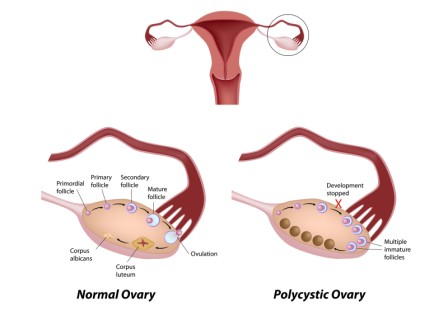
Can Ovarian Cancer Be Mistaken For Pcos / Bloating might not be sign of too much food, cancer ... - There are several types of ovarian cysts.. There's no clear link between ovarian cancer and pcos. It's already a rare cancer, which makes it notoriously hard to catch. So is there a connection between fibroids and polycystic ovarian syndrome (pcos)? By understanding a patient's family history and lifestyle, the nurse can encourage patients to take action that supports their health and. Stay informed, educate patients, be alert for risk factors, encourage screening, and treat them with compassionate care.
Although research has not found a direct link between pcos and breast cancer, research has found a link between diabetes and breast cancer. The connection between pcos and other reproductive system cancers, like breast and ovarian cancer, is more uncertain. To read more about pcos, click here. Ovarian cysts with all of the features of ovarian cancer warrant the recommendation of removal of the cyst to definitively determine if it is benign or malignant. Ovarian cysts are a common occurrence among women of reproductive age.
Pin on PCOS from i.pinimg.com Other ovarian cyst symptoms may include pelvic pain, high blood pressure, lower back pain, abdominal pressure and nausea. This is a common phenomenon in late postmenopausal women, which can trigger swelling of the ovaries along with the formation of ovarian cysts. Ovarian cancer starts in the cells lining the ovaries. While some studies have proved that the risk of ovarian cancer actually becomes lower due to pcos. Ovarian cysts are common among women of all ages. Ovarian cysts of less than 1 centimeter (0.4 inches) in size are common in postmenopausal women, the vast majority of which will be benign. For example, heavy menstrual bleeding could be caused by a range of conditions, such as uterine fibroids, polyps, bleeding disorders, certain medications, or pelvic inflammatory disease, in addition to pcos. Research published in the journal cancer causes and control indicates that higher levels of androgens and insulin may increase your risk of breast cancer.
Around 90% of ovarian cancers occur in women.
Learn about the connection between a missed period and ovarian cancer. Research published in the journal cancer causes and control indicates that higher levels of androgens and insulin may increase your risk of breast cancer. Ironically, women with pcos (polycystic ovarian syndrome), or pcod (polycystic ovarian disorder), might not have the characteristic polycystic ovaries. Around 90% of ovarian cancers occur in women. To read more about pcos, click here. For example, heavy menstrual bleeding could be caused by a range of conditions, such as uterine fibroids, polyps, bleeding disorders, certain medications, or pelvic inflammatory disease, in addition to pcos. The three women featured below were all diagnosed in their teens and 20s and had the characteristic. Ovarian cancer starts in the cells lining the ovaries. Both have been linked to hormone imbalances. The onset of polycystic ovarian syndrome can bring about conditions that are also central to an environment that encourages the creation of cancer. Women with pcos may be at higher risk for type 2 diabetes, high blood pressure, heart problems, and endometrial cancer. Why women with this disease may have a higher exposure or higher infection rate is not known. Polycystic ovarian syndrome causes cysts, (also not cancerous), that suddenly occur in one or both ovaries.
Ovarian cysts of less than 1 centimeter (0.4 inches) in size are common in postmenopausal women, the vast majority of which will be benign. Although the rate of ovarian cancer has been slowly falling over the past 20 years, the american cancer society's latest estimates are that about 21,290 women in the united states will receive a. Learn about the connection between a missed period and ovarian cancer. Women with pcos may be at higher risk for type 2 diabetes, high blood pressure, heart problems, and endometrial cancer. Both conditions can disrupt menstrual cycles, cause pelvic pain and impair fertility.
Ovarian Cysts | Endometrioma | Hemorrhagic cysts | Naturopath from www.naturopathtoronto.ca Researches have shown that women with pcos have a high risk of ovarian cancer; The nurse's role for both pcos and ovarian cancer are the same: Pcos can cause missed or irregular menstrual periods, excess hair growth, acne, infertility, and weight gain. Women with pcos may be at higher risk for type 2 diabetes, high blood pressure, heart problems, and endometrial cancer. For example, heavy menstrual bleeding could be caused by a range of conditions, such as uterine fibroids, polyps, bleeding disorders, certain medications, or pelvic inflammatory disease, in addition to pcos. Due to pcos and ovarian cancer having some similar symptoms, they can be mistaken for one another. To read more about pcos, click here. Communities > ovarian cancer > pcos.
Both conditions can disrupt menstrual cycles, cause pelvic pain and impair fertility.
Other ovarian cyst symptoms may include pelvic pain, high blood pressure, lower back pain, abdominal pressure and nausea. Ovarian cysts of less than 1 centimeter (0.4 inches) in size are common in postmenopausal women, the vast majority of which will be benign. Studies have also shown that women who don't take oral contraceptives are at high risk of having ovarian cancer. It has been found that women with ovarian cysts usually do not have much difficulty getting pregnant, whereas it is common for those with pcos to struggle. There's no cure, but a healthy lifestyle and hormonal therapies can mitigate symptoms. So is there a connection between fibroids and polycystic ovarian syndrome (pcos)? By understanding a patient's family history and lifestyle, the nurse can encourage patients to take action that supports their health and. For example, heavy menstrual bleeding could be caused by a range of conditions, such as uterine fibroids, polyps, bleeding disorders, certain medications, or pelvic inflammatory disease, in addition to pcos. Why women with this disease may have a higher exposure or higher infection rate is not known. Polycystic ovarian syndrome causes cysts, (also not cancerous), that suddenly occur in one or both ovaries. In fact, half of women with pcos get pregnant without any medical intervention. Alan copperman, medical director at progyny , tells bustle. There's no clear link between ovarian cancer and pcos.
Pcos can be difficult to diagnose because some of its symptoms have a variety of potential causes. Because an association between pcos and breast cancer is plausible, it is imperative to be vigilant about breast disease in the follow up care of all women with pcos. Although the rate of ovarian cancer has been slowly falling over the past 20 years, the american cancer society's latest estimates are that about 21,290 women in the united states will receive a. However, ovarian cancer is usually not diagnosed until after it has spread and is difficult to cure. Both conditions can disrupt menstrual cycles, cause pelvic pain and impair fertility.
Look out for these 12 signs of ovarian cancer [Infographic ... from www.hellawella.com Pcos can be difficult to diagnose because some of its symptoms have a variety of potential causes. The types of treatment for pcos may depend on whether or not a woman plans to become pregnant. Pylori in women with polycystic ovarian syndrome was nearly double the rate for other women. The nurse's role for both pcos and ovarian cancer are the same: Ovarian cysts are a common occurrence among women of reproductive age. Alan copperman, medical director at progyny , tells bustle. For example, heavy menstrual bleeding could be caused by a range of conditions, such as uterine fibroids, polyps, bleeding disorders, certain medications, or pelvic inflammatory disease, in addition to pcos. Ironically, women with pcos (polycystic ovarian syndrome), or pcod (polycystic ovarian disorder), might not have the characteristic polycystic ovaries.
While some studies have proved that the risk of ovarian cancer actually becomes lower due to pcos.
Missing a period can be a sign of something minor, or there's a small chance it could be ovarian cancer. Pcos can be difficult to diagnose because some of its symptoms have a variety of potential causes. Ovarian cysts are a common occurrence among women of reproductive age. Studies have also shown that women who don't take oral contraceptives are at high risk of having ovarian cancer. To read more about pcos, click here. Ovarian cysts are common among women of all ages. Many symptoms of ovarian cancer are hard to recognise as they are similar to conditions such as irritable bowel syndrome (ibs). So is there a connection between fibroids and polycystic ovarian syndrome (pcos)? Stay informed, educate patients, be alert for risk factors, encourage screening, and treat them with compassionate care. Around 90% of ovarian cancers occur in women. There's no cure, but a healthy lifestyle and hormonal therapies can mitigate symptoms. For example, heavy menstrual bleeding could be caused by a range of conditions, such as uterine fibroids, polyps, bleeding disorders, certain medications, or pelvic inflammatory disease, in addition to pcos. However, ovarian cancer is usually not diagnosed until after it has spread and is difficult to cure.